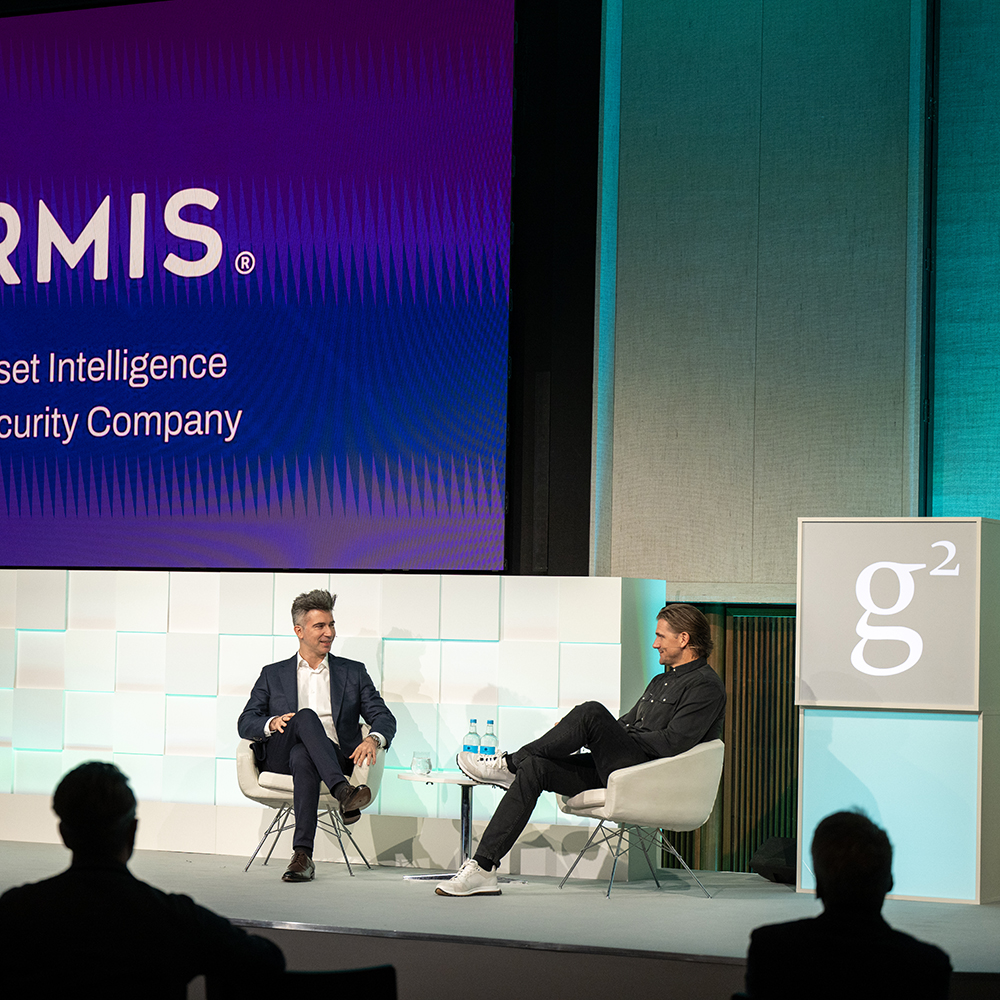

For this edition of Founders’ Corner, we spoke with Yevgeny Dibrov, Co-Founder & CEO of Armis. Armis is a cyber exposure management platform that provides organizations with complete visibility and continuous protection across all managed, unmanaged, and Internet of Things (IoT) devices. ServiceNow completed its $7.75B acquisition of Armis in April 2026.
When I look back, entrepreneurship was always part of me, even during my army service. In Unit 81 of the Israeli Intelligence Corps, where I served, the culture was very entrepreneurial. We did not have the massive budgets of agencies like the NSA or CIA, but we were expected to innovate and succeed regardless. That experience taught me the fundamentals of operating like a startup, being scrappy, resourceful, and absolutely focused on outcomes.
After my service, I pursued a degree in computer engineering at the Technion, and soon after, joined Adallom as the first employee. There, I had the chance to wear many hats – leading business development, running proof-of-concepts, and building out sales in EMEA and APAC. For me, it was the best kind of “business school” because I was learning directly by building something alongside great founders and investors. When Microsoft acquired Adallom in 2015, it gave me perspective. While many of my colleagues joined Microsoft and later founded Wiz, I felt strongly that it was the right time for me to create something of my own.
I had been discussing ideas with Nadir Izrael, who became my co-founder. When the deal closed, I left Microsoft retention money on the table and jumped straight in. It was not about taking the comfortable path; it was about conviction. I believed we could solve a critical challenge that no one else was addressing – giving organizations visibility and control over all their connected devices and assets. That decision to go my own way was driven by passion, timing, and a clear vision for what became Armis.
From the very beginning, we built Armis with the mindset that data would be the differentiator. My co-founder, Nadir, came from Google, where he led Google Suggest. His experience shaped our approach – rather than treating cybersecurity as siloed, with IT, OT, and healthcare systems, we saw everything as “assets.” With enough data and the right models, you can unify how those assets are understood, managed, and protected.
We started collecting data from every deployment, and over time that scaled into an unparalleled dataset. Today, we monitor more than 6.5B devices globally. That constant stream of information fuels our AI and machine learning models, enabling us to instantly recognize device types, detect abnormal behavior, and identify vulnerabilities that traditional tools cannot. Our system continuously learns. If a threat is detected in one customer’s environment, that intelligence immediately protects every other customer we serve. This network effect means our platform gets smarter every day.
Large incumbents like Cisco or Palo Alto have incredible resources, but they often rely on legacy approaches or siloed products. Our early and deliberate adoption of AI, combined with the breadth of our dataset, allows us to move faster, be more accurate, and deliver a unified platform that customers find easier to use and more effective. That continues to be a huge competitive edge.
Yes, over the years, we have had acquisition offers from some of the biggest names in IT and cybersecurity. It is natural in this space, given the pace of consolidation and how critical our technology has become, but our long-term priority has always been to build Armis. A good example is when we closed a deal in 2018 that I would call a “venture acquisition”. It gave employees and early stakeholders some liquidity while preserving our independence and momentum. It was the best of both worlds: rewarding the team for what we had achieved while keeping the company intact to pursue much bigger goals.
Looking ahead, our target is to reach $1B in ARR within the next three years. IPO will be a milestone on that journey; not something we are rushing toward, but something that will naturally come when the timing is right. For me personally, hitting that billion-dollar ARR and taking the company public is not just about valuation. It is about joining the ‘Hall of Fame’ of cybersecurity entrepreneurs, proving that we built a generational company that changed the industry.
From the very beginning, we built Armis with the mindset that data would be the differentiator… Today, we monitor more than 6.5B devices globally. That constant stream of information fuels our AI and machine learning models, enabling us to instantly recognize device types, detect abnormal behavior, and identify vulnerabilities that traditional tools cannot.