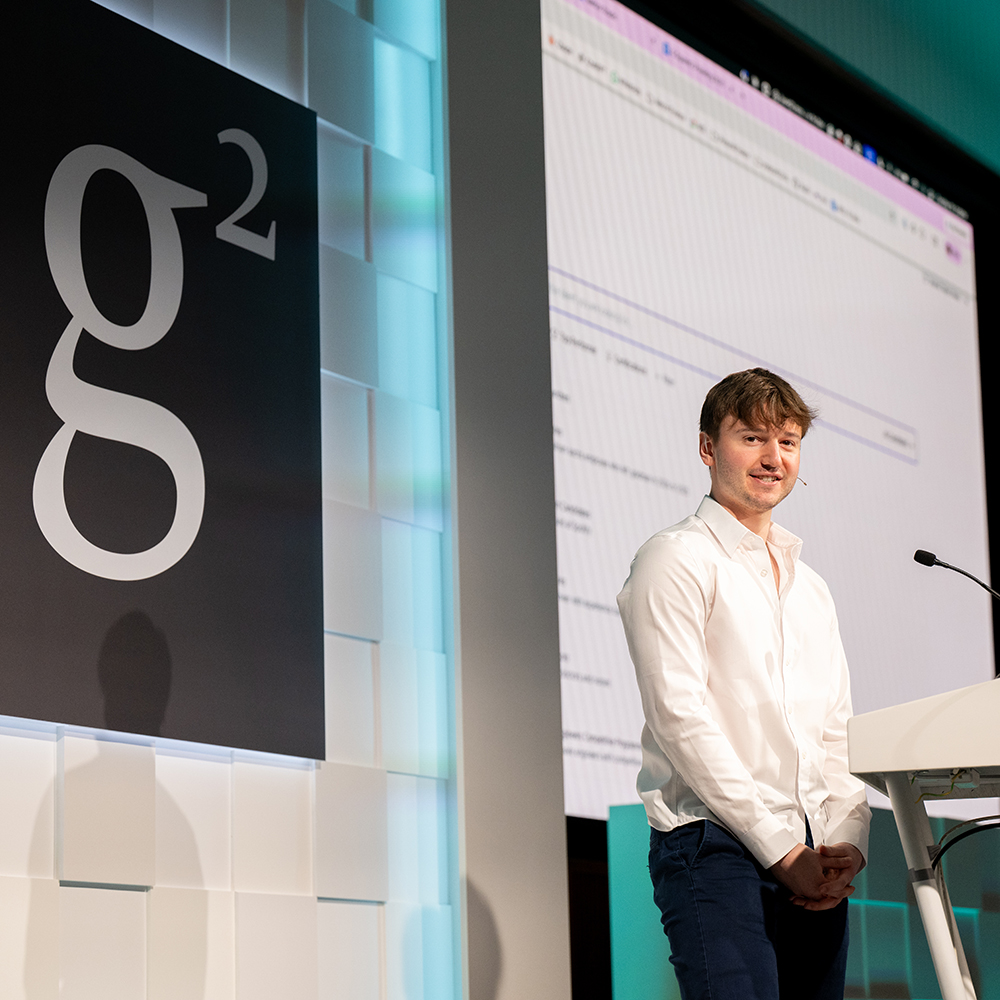

For this edition of Founders’ Corner, we had the pleasure of speaking with Brendan Foody, Co-Founder & CEO of Mercor. Mercor is an AI company that connects domain-specific experts with the frontier labs that are evaluating the next generation of AI models. Mercor recruits and vets PhD-level candidates and industry professionals, integrating them directly into model training and evaluation workflows. Under Brendan’s leadership, Mercor is helping companies scale AI development with high-quality human expertise.
In the early days of Mercor, after meeting with OpenAI, we realized the human data market was undergoing a major transition. It was moving away from the crowdsourcing paradigm that Scale AI pioneered – using low- and medium-skilled workers to produce simple training data for early LLMs – and rapidly shifting toward a sourcing-and-vetting model. Labs now needed Goldman bankers, McKinsey analysts, and FAANG (Facebook, Amazon, Apple, Netflix, and Google) software engineers to work directly with researchers, building high-complexity evaluations and reinforcement-learning environments that meaningfully improve model capabilities.
Once we understood that shift, adoption accelerated quickly. Within nine months, we became OpenAI’s largest vendor, and soon after, the primary vendor for all the leading AI companies, and application-layer companies such as Cursor, Cognition, Harvey, and Sierra. Over that same period, we scaled from roughly $1M to $500M in run-rate revenue in 18 months while remaining profitable throughout.
There are powerful network effects in aggregating both a large, diverse pool of experts and the data flywheels that improve matching over time. Success depends on understanding what compensation individuals will accept, predicting how they will perform in specific roles, and efficiently routing tens of thousands of contributors. Achieving that requires marketplace liquidity – the ease and speed with which buyers and sellers can find each other and complete transactions on a platform. That level of liquidity is extremely difficult for any individual lab to build in-house, which is why labs have broadly moved away from internal solutions in favor of external platforms that can operate at the necessary scale.
Over a 10-year horizon, I couldn’t be more bullish. This new category of knowledge-work data will be orders of magnitude larger. But in the short term, the business is significantly levered to hyperscaler budgets. If there’s a market pullback, it will affect us. To help prepare for that, we focus on two things. First, maintaining a very large balance sheet – we have cash on hand, and our payroll is under $50M a year, so we can weather the storm pretty effectively. Second, building out our enterprise business. Every major enterprise wants custom evaluation frameworks to train agents using their proprietary data. Goldman Sachs doesn’t just want to rely on OpenAI to automate investment banking – they want to leverage their proprietary data to train agents on their workflows and refine their competitive advantage. Focusing on that build-out is another path that we’re leaning into to diversify our customer set beyond the core ten labs.
I think it’s about defining the category of how people teach AI. Everyone is talking about job displacement as this looming problem, and I expect that concern will only continue to grow over the coming few years, but no one is talking about how every major technical revolution also creates entirely new job categories. Building a company that creates new economic opportunities and defines a new category is what makes the work so fulfilling.
Building a company that creates new economic opportunities and defines a new category is what makes the work so fulfilling.